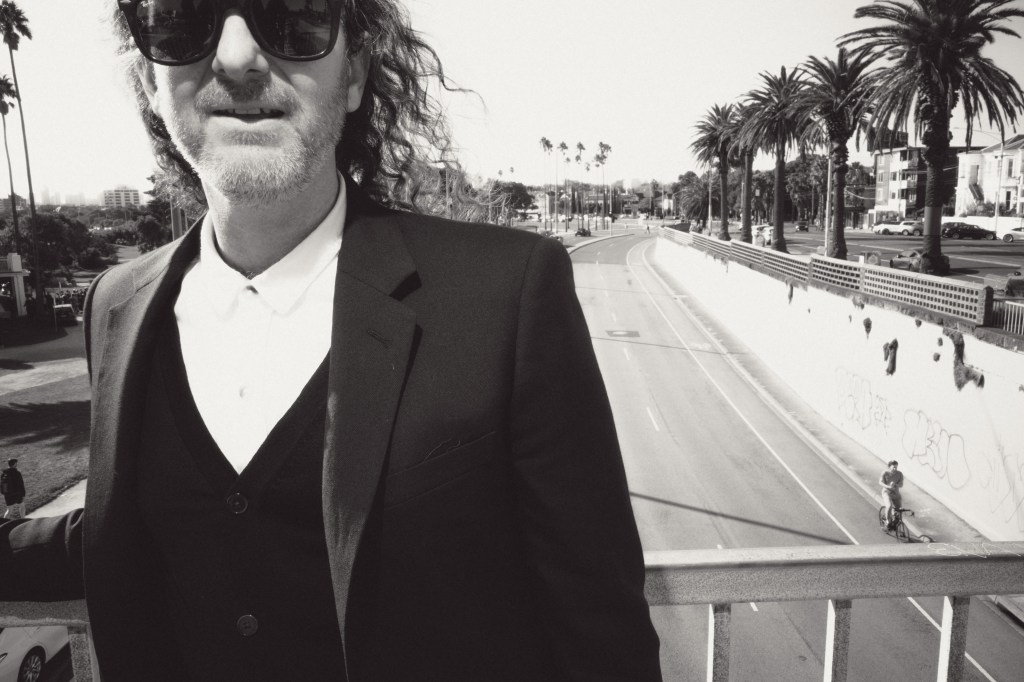
(photo credit: Jamie Wdzeikonski)
#1: Hey Mike! Know you just got back from a US tour – making this the 3rd continent you’ve toured this year, correct? How have tours been going for you? What makes for a good tour? Is it a different experience in different continents? Are you seeing a unique appreciation as an artist throughout particular parts of the world?
M: Hey Ian, Yeah, we’ve hit North America, Australia, and Europe this year – it’s been a busy one. I’ve felt pretty lucky – each of the tours has felt like a dream run. It’s been a blast playing with Nick and Monika and folks have responded well. It feels like there’s a bit of progress or momentum, so that keeps things exciting. Things that make a good tour: good crowds, good food, good weather, comfortable accom (we were very lucky to stay with some very generous folks this last year). Less glamorous, but vitally important are folks buying tickets, records, and merch – the money side of things is totally make or break on a tour, and we’ve been really fortunate there as well this year. On top of that, bigger festivals anchor a tour, so festivals like Binic Folks Blues in France and Gonerfest in Memphis really made things possible this year.
#2: So I’d like to go way back to the beginning. I know you’re originally a California guy – can you talk about what your life was like there? When and in what capacity did you start making music? Do I remember right in hearing you did sound at The Hemlock Tavern in SF for quite awhile?
M: I was born in Merced, California, in the Central Valley. We were fairly close to Yosemite National Park. My childhood was a pretty average middle class suburban semi-rural one. I didn’t really fit into that sliver of American society. I picked up a guitar for the first time in college in Santa Barbara, but it wasn’t until I moved to Melbourne that I really started digging in, playing in a first band, going to shows, being exposed to something other than MTV and mainstream radio. After a year in Melbourne studying, I moved to LA and started working in studios and writing music for the first time. I was in Melbourne for a year, then LA for three, then back to Melbourne for five years. After visa struggles, I was back in San Francisco in 2010, and that’s when I started working at the Hemlock. That was a real transformative experience – I was probably seeing 10 bands a week, and Hemlock was an epicenter for independent local and touring musicians in SF. Anthony Bedard, who was the booker for the Hemlock, is now my booking agent (Talent Moat), so that was a very influential time.
#3: So was your initial move to Australia for college, then? What was it you studied? How did the culture feel different than in CA? Was the move to Los Angeles calculated? Was leaving CA once again for Melbourne calculated as well? What drew you to Australia?
M: Yeah, my initial move to Australia was for an exchange in 2002 – my last year of college. I studied world religions. I had been brought up in a relatively conservative area by relatively conservative parents. Melbourne’s culture for me at that time was very much the opposite – I loved the absence of taboo and the city’s thriving arts and music scenes. Moving to LA after that year was really just a stab in the dark. I had returned from Melbourne enamored with the place and the people, and didn’t really feel like I had a place to return to. I moved to LA because there was a recording school there and I knew I wanted to make music. Leaving LA a few years later for Melbourne was totally calculated – I spent a lot of time researching visas, and trying to find a way to get back over there. I never really fell into a scene I liked in LA – I look back somewhat fondly of my youth spent in studios, but really that part of my life seems disconnected to the musical path I found myself on once I was back in Australia.
#4: Okay, so now you’re back in Melbourne for 5 years. Are you playing in bands at this point? And/or solo? What’s the musical atmosphere looking like in 2005 – 2010? Are you feeling any different treatment, being from the States? What are you doing to make ends meet on a visa?
M: When I moved back to Melbourne in 2005, I started playing music with friends straight away – this was a particularly formative period for me, slowly figuring out how to be in a band, book shows, and put out releases in a DIY manner. There were always a few songs that I wrote that didn’t really fit the bands that I was playing in, but I didn’t really start playing on my own until 2008. The musical atmosphere in Melbourne at that time was incredible. Slowly, the music scene was moving to the north side of the river, but there were still some interesting things happening in St. Kilda. It felt like I caught the very end of that scene, and was lucky enough to see Rowland S. Howard play a handful of times. Bands like the Stabs, The Drones, Dirty Three all loomed pretty large at the time for me in Melbourne. I also got to see The Saints, Laughing Clowns, Beasts Of Bourbon, Scientists, etc. It was a pretty special time. I was a bit of a novelty being from the states, but I did my best to adapt myself and not stick out too much. I started teaching music at this time – it was one of the things I could do with the visa I had.
#5: I’m incredibly jealous you got to see Rowland play. The Birthday Party are a top 5 for me without a doubt. Tattoo to prove it.Were there any options at all for you to stay in Australia? How are you feeling about leaving at this point? What made you move to San Francisco this time?
M: Unfortunately the visa I was on was only a temporary one, so I missed out on extending it. Australia makes it extremely difficult for people to gain residency outside of student and limited work visas. When I had to go back to the states, I wanted to try someplace different – LA was never the right fit for me, and at the time, SF and Oakland had a great music scene. My family is in Northern CA, so that was a factor as well.
#6: So now it’s 2010 and you’re in the Bay Area working at the Hemlock. Are you making music upon being back in the States? Do you have to form a whole new band, or are you kicking it solo at this point? Where are we here in the lineage of your recorded output? How are you liking SF?
M: I tried my best to hit the ground running as soon as I moved to SF, but it took a while to get things going. I did some recording with my friend Ray Raposa up in Portland (A Horse 7″), went on a couple solo tours, and tried to play as much as possible. I was keen to get a band together at that point, but things take time in a new city. I played a show with Utrillo Kushner (Colossal Yes) in 2011, and we really hit it off. I asked him to play drums on an upcoming recording (Mountains + Valleys EP), and things kinda grew from there. Utrillo is a person who is universally loved, and had done a lot of touring in the past, so once I knew him, my universe kinda opened up as far as a Bay Area and US underground music scene is concerned. He’s played on every record I’ve made since, and I really feel like I owe a huge part of my career as an artist to him.SF was pretty cool when I moved there in 2010. Hemlock had a really consistent stream of great shows happening, and bands like Sic Alps, Oh Sees, Ty Segall, Kelley Stoltz, Grass Widow, and tons more were playing a lot. Looking back I probably caught the very tail end of that scene. By 2012 the city felt somewhat overrun by tech frat dudes, a lot of bands broke up or moved to LA, and Oakland was the much more interesting of the two places, so I moved over there.
#7: Golden Theft, your 2nd album, comes out around this period of time as well, yes? Are you feeling a sense of.. a “fan base”, of a musical community? Do you have a hope of or a plan to return to Melbourne throughout this? How did that return end up happening?
M: Yeah, Golden Theft was a continuation of ‘Mountains + Valleys’ – I recorded a few more songs with Utrillo and made it into an LP. I don’t think I had much of a fan base at that point outside of folks I knew or had played music with. I was so new to making records, that I didn’t really have a sense of how to do it in a way to get noticed. But Aquarius Records in SF was really supportive (they were the ones who told me it’s better to make your own label to put on a record, so Golden Theft was the first record on my label Spectacular Commodity). That record was the first to start to get noticed in underground circles. My musical community was growing as well. Utrillo had opened up a world of rad musical connections for me in the Bay Area, and my continued touring Australia meant that I was still meeting lots of band, radio, and press folks over there. As much as I loved living in SF and Oakland, I knew that Melbourne was a place I wanted to be – something about the early epiphanies I had had, and close friends I had made. After an Australian/New Zealand tour in 2013, I started dating a new partner I had met there. We dated long distance for while I was living in the states, then I moved back over to be with her.
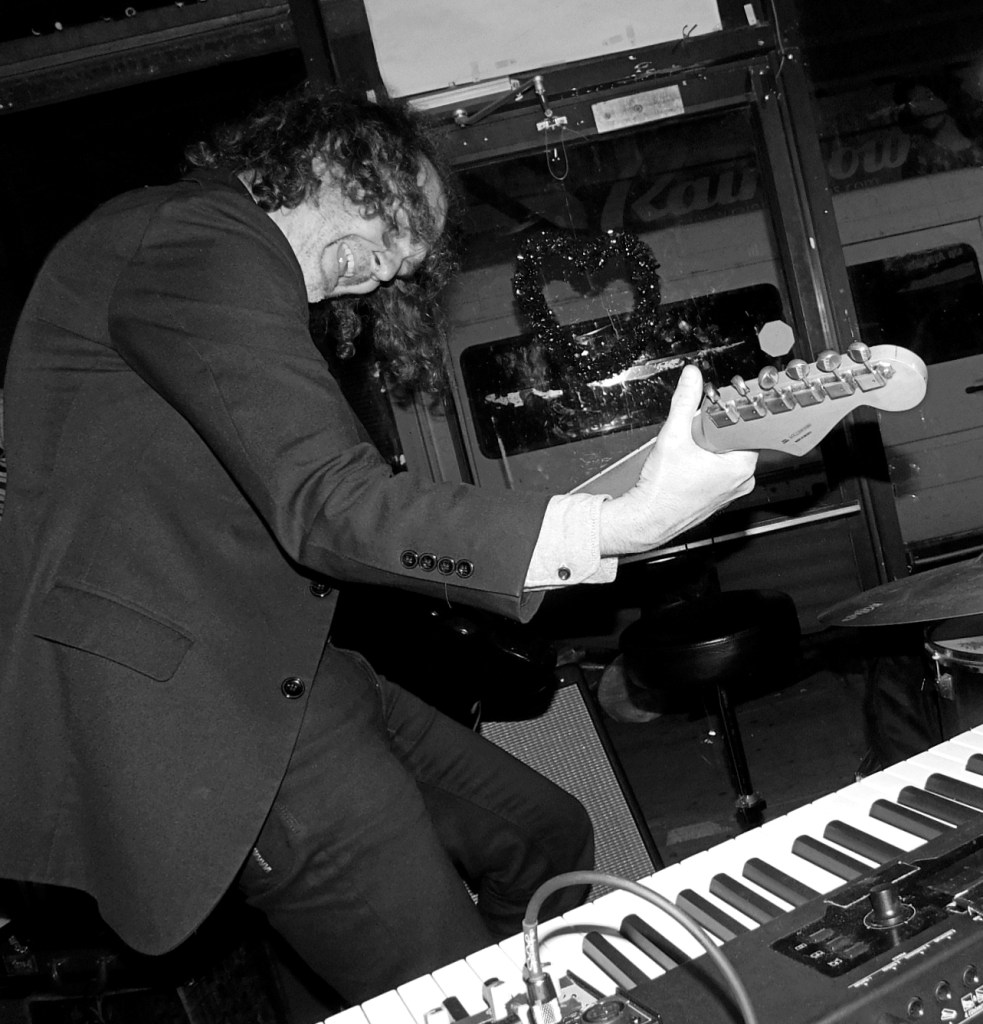
(photo credit: Dave Brushback)
#8: So now you’re back in Melbourne. Is this the final move? How do you feel about moving so much? So next up is the 3rd LP, Gravity/Repulsion, which you originally released yourself. Was this recorded exclusively in Melbourne? Are you playing with a regular band or consistent musicians? Are you touring? Are you feeling settled back in Australia, working, feeling part of a community?
M: Gravity/Repulsion was recorded the week I left Oakland, it was both a culmination of all the work I had put in with Utrillo and Muslim Delgado as a band, and a sort of rushed going away. It was a shorter LP, but those were the songs we had at the time. If I had stayed in the Bay, I probably could have had someone there put the record out, but my plans were made and I was leaving. I was really proud to make that record with Muslim and Utrillo and Phil Manley. I can remember trying to shop it around to a few labels, but because I had just relocated, I was again up in the air with a home base. I played a few shows in 2016 as I started putting together a new band in Melb, but things went slowly as I got settled. My friend Lachlan Denton was particularly helpful/generous in getting things rolling with the band playing drums – he was a fan from when I had toured while living overseas, and he also recruited his brother Zac Denton to play bass in the early days. Sometime in 2016 I made the call to self-release the record – I was keen to get the ball rolling with shows and tours, and didn’t want to wait around. The release of the record was instrumental in helping me form the Melbourne community that I have today. My friend Tom Lyngcoln, The Old Bar, RRR, PBS, and Poison City Records all took a real interest in the record, and slowly spread the word around town without me noticing. Out of nowhere, people in Melbourne seemed to care. I’m still extremely flattered and blown away that that happened. I get the feeling that Tom Lyngcoln has done that for a ton of bands – he’s a real music scene powerhouse, having fronted and championed countless underground Australian bands.
#9: So is this the last major move for you, then? Have you been able to establish permanent visa status in Australia, either by this point in time or in the current? Can you speak a bit to what that process looks like? Has being an artist been helpful in any way towards securing citizenship?
M: For the time being it is. I can’t say what the future holds, but for now I’m pretty settled in Melbourne. I became an Australian citizen a few years ago (in addition to my US citizenship), so I can come and go as I please. That process can be quite different (and much more difficult) depending on the person, but in my case the real challenge was getting permanent residence – the step before citizenship. PR is a sizeable barrier to cross in Australian immigration – at that stage you are given ongoing rights to work, healthcare, social services, and eventually a path to citizenship. So most temporary visas don’t make the step from temporary to permanent residence easy. In my case, it was my 5th different visa (each of 1-2 years) before I could meet enough requirements (time/money/evidence/tests) to make that jump. In Australia, artists are at the bottom of the priority list for immigration – I would have had a better chance doing manual labour – so no, it didn’t help. In the end, it was only through my partner’s citizenship that I was able to immigrate.
#10: Looks like we’ve made it through the past, so let’s keep the questions current and future minded.How’s daily life in Australia? How are shows there for you? Are you seeing a difference in.. crowds, interest, appreciation, what have you between different countries/continents? Do you have favorites? Do you have least favorites? Are there forthcoming tours planned? Where do you go next?
M: Daily life in Australia is pretty good right now. I’m almost done with a year of touring (have a few shows around Australia with Tropical Fuck Storm for the next two weeks), so I’m finally getting a chance to settle a bit. More time to play music, try to grow some veggies, read, enjoy the summer. Really looking forward to the downtime. Shows have been really great this year, we’ve got to play with some great bands in Melbourne this year – The Hard Quartet, Lost Animal, Simon Joyner, Leah Senior, etc. Our album launch sold out, and the city has really come out to support us, which feels great. Outside of Melbourne, shows in Australia are probably comparable to shows in cities in the US or Europe. Some places/nights we have really great turnouts, and here and there you have an off night. It’s hard to pick a favourite, but this years shows at Hitness Club in Leipzig, Binic Folks Blues in France, Dabadaba in Donostia, Gonerfest in Memphis, Soft Junk in Nashville, The Earl in Atlanta, Union Pool in Brooklyn, and Kilowatt in SF, The Tote in Melbourne were ones – fantastic crowds, great sound, great vibe, so we could really get into a zone on stage. There are unconfirmed festival offers floating around for both the US and Europe next year, so hopefully we can book tours around them. My guess is I’ll be in the US in August next year, but it’s a little bit of wait and see. I’d love to finally make it back to Minneapolis!
#11: I’ll be 47 that month, somehow: come play here and I’ll book it myself.You’re a somewhat similar age, yea? What keeps you kicking around the underground after a couple decades? Do you anticipate ever being able to live solely off art? Can you picture it being done on your own terms? I’ve seen you’ve pulled your music off Spotify – will you discuss the impetus behind this?
M: Sounds good – I’ll try my best! Yeah, I was born in ’81, so we’re pretty similar ages. If the nature of your question is why do I keep making music at 20 years, I’d say I still love doing it. As far as why my music remains underground probably has something to do with the type of music I make and the circles I run in. As much as I’d love housing security or extra time to do things at a slower pace (two of the things I imagine financial ‘success’ would bring), I wouldn’t or couldn’t change the way I’m doing things if I tried. So in that sense, my music will hopefully always be on my terms – I’m pretty stubborn in that regard. I can’t really foresee a realistic way that my music is my sole source of income, but I’ve set things up so hopefully it can be a good part of it. The private teaching practice that I run allows me to engage with music for work, and to pass on what’s helped me do what I do, so that feels like pretty decent fortune.I pulled my music off Spotify and Amazon this week. I was happy to disengage from those services. I’d refer anyone who’s curious to find out more about what’s going on to have a look at Deerhoof’s Instagram posts on the matter (or related news coverage) – it’s pretty in depth. Basically, those two platforms were engaging in practices I found pretty revolting, and I didn’t want to be even a miniscule part of their benefiting financially. I pass no judgement on anyone else’s choices in that regard, but it felt right for me. For anyone needing the convenience, there are plenty of other services that do similar things, and ones like Bandcamp let you support artists and labels directly. Maybe one day there will be less focus on convenience in finding music, and more on the benefits of putting in a little bit of work to find something new.
#12: You mentioned private teaching – will you elaborate on this? What is it you teach? Is there a specific clientele? Have you ever had musical teachers yourself? And then: what’s on the horizon for you? Can we discuss the release we’re chatting on? Are there other releases you’re planning towards?
M: I’ve taught piano, guitar, and singing for the last 20 years. I find I work best with folks who are self disciplined, so that mostly means adults, but I’ve got some great younger students as well. I took private lessons as an adult, and had two teachers that made a big impression on me, both in my ability to begin to develop my own musical style, and eventually to teach, which I’m very grateful for. Doing so has allowed me to have the flexibility and income to tour and make records, and that hands-on experience is really where I learned how to do everything I’m doing now. I’m currently working on a grant to help fund an upcoming record that Greg Cartwright and I are working on. We wrote a couple songs together when I was in Memphis a few months back and had a great time. We got Natalie and Keith from Optic Sink and JB from Aquarian Blood to help us flesh things out, and the demos sounded really interesting. So I’m hoping to go back and do that this year. I’m also getting a solo set together for a run of shows with Tropical Fuck Storm starting this week, and then need to do some more arrangement for a collab performance with Lloyd Swanton, Mick Turner, and Joe Talia in January. Then in December I’m gonna rest!Super stoked about the possibility of this live record with 25 Diamonds! So stoked you asked, I’ve never released any live performances before. Later this month, I’m gonna listen back to a bunch of recordings from our tours. At this point, I’m thinking one side will be a band thing, and the other might be an excerpt from that January show in Sydney I mentioned before. The last record had two sides to it – kinda a rock band thing, and a more expansive improv sounding thing, so it would be nice to have bits of both. I guess we’ll just wait and see!
#13: I’m not sure how I want to wrap this up. So I have 2 thoughts:
1, my friend Fred and I had a conversation a few days ago where we talked about the state of making art in 2025, and more specifically about a feeling that young people don’t seem to connect to music in the way we did when we were young – that there isn’t the community involvement, the obsession with and pursuit of favorite bands – that music is consumed in 20 second sound bites from Tik Tok videos rather than digging through record stores. Are you feeling any of this? Do you have any inklings towards what the future of artist support and independent music looks like? Do you see positives or negatives towards this?
2, are there topics we haven’t discussed that you would like to? In essence, I’d like you to ask and answer a question yourself.Thanks Mike! You know I’m a big fan, both musically and personally – I’m excited for what your future holds.
M: For sure, a new generation is going to experience art and music differently than our generation did, especially at the rate things are evolving. Probably different from my preferences for consuming art (I definitely like the community/live band thing too), but I can’t say if it’s better or worse. I’m sure the way I listen to music is already much different now than before we had some much internet around. I’ve got no idea about the future (artist support or otherwise). Art is going to keep happening, and it’s certainly going to look different than it has before. On that topic, maybe it’s good to end by shining some light on a book that I’ve loved recently, that in its own way discusses the nature of art (and the emergence of the poetic image as essential to the human experience) – The Poetics of Space by Gaston Bauchelard. Published in the early sixties, it was a huge influence on modern philosophers like Deleuze and Foucault as well as the fields of art, design, architecture, and many others. At times quite heady, but usually pretty absorbable, it’s a true wonder. My friends Ben Chasny and Pete Warden were both banging on about it around the same time, and it made an indelible impression on me. I can’t recommend it enough. Great to chat, and hope to see ya over there soon!
Thanks,
Mike
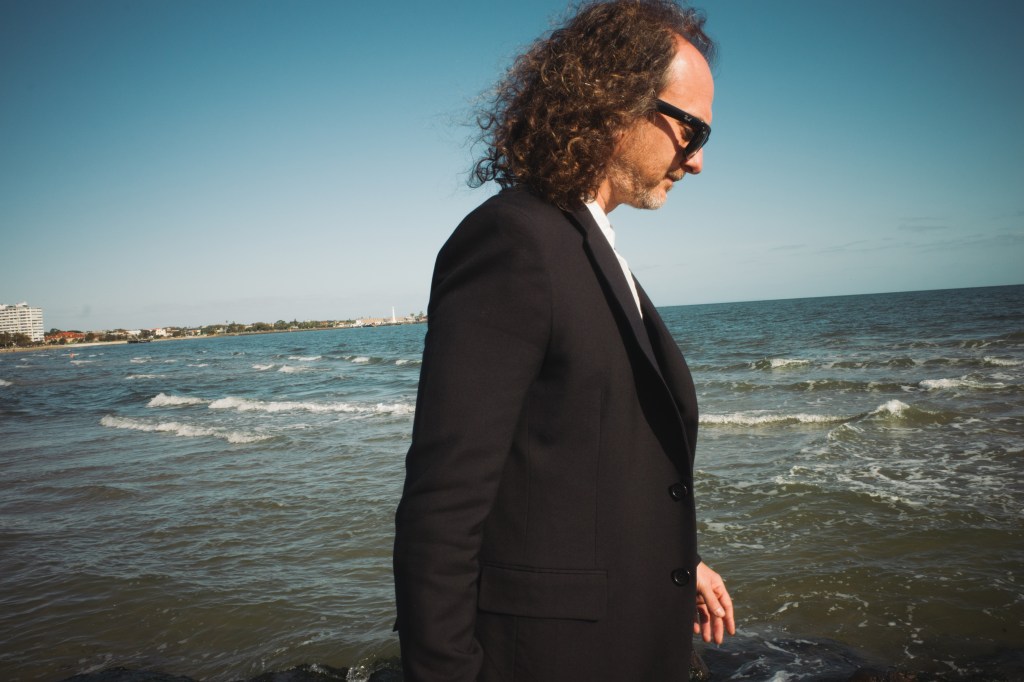
(photo credit: Jamie Wdzeikonski)
 25 DIAMONDS LABEL
Leave a comment